
Since CMHC launched the program as part of the 2018 National Housing Strategy, the Rental Assistance Program (FCHI-2) has been a lifeline that helps keep low and moderate-income Canadians housed according to their means.
With the release of our first Rental Assistance Portfolio Review Report, we’re able to see exactly how big an impact the program is making, and for whom.
Through 2024, the program is now supporting over 4,500 households across more than 450 housing co-operatives in four provinces. With $29.1 million in rental assistance allocated in 2024 alone, the program provides vital support to single-person households and one-parent families, who face the greatest challenges in Canada’s housing market.
Who is Helped
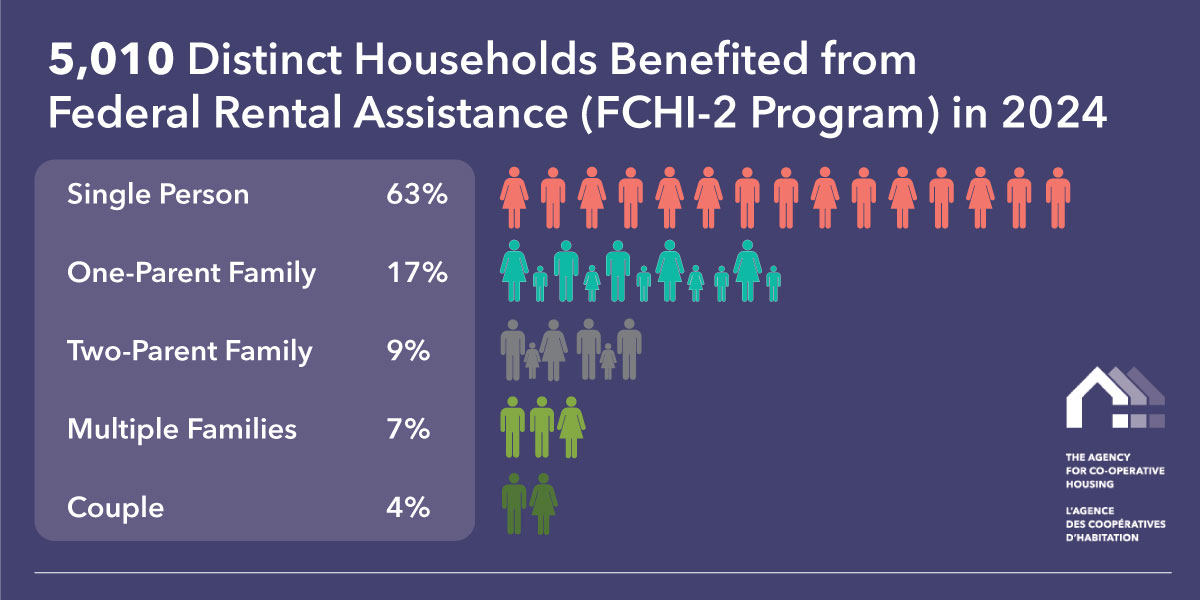
The people who receive the most assistance are those most disadvantaged in the current housing market. Eighty-three per cent of the assistance goes to single-person households and one-parent families with an average of 1.7 dependents.
A significant proportion of rental-assistance dollars (63 per cent in 2024) is supporting households in major urban areas, such as Metro Vancouver and Toronto.
Looking at the reported income data, we see how important the program is in keeping people off the street. About 75 per cent of households report a monthly income of $1,500 or more, and 22 per cent report incomes between $500 and $1,500. Three per cent report a monthly income below $500, with 69 per cent of those households reporting no income at all.
A unique aspect of the program is that by helping keep people housed in co-ops, where even the break-even rents are more affordable, the less rental assistance is needed than for similar housing than on the private rental market.
The Program’s Future
In 2025-2026, we expect to see approximately 40 more co-operatives transfer to the program, and by 2028, we expect that number to grow to 60, however the program is only funded to March 2028
The report clearly shows that the Rental Assistance Program assists singles and families who would otherwise be unable to afford rent in housing co-operatives across the country, not to mention in the private rental market. If the program were to end, most of these households would simultaneously face economic eviction, owing to their inability to pay their full monthly housing charge, and would have nowhere else to go.
A renewal of this federal rental assistance program (FCHI-2) would allow co-ops to continue to offer decent, affordable housing, which is badly needed at a time when the housing crisis is top of mind for Canadians.
Read the full 2024 Rental Assistance Portfolio Review Report.